


Labels are at the heart of every AIDC system. They carry the information that scanners depend on to identify products, track assets, and guide operations. Yet many businesses underestimate how critical it is to choose the right printing technology. The wrong choice can lead to fading labels, scanning failures, compliance risks, and increased rework.
The two dominant printing technologies are direct thermal and thermal transfer. Both use heat, but they behave very differently in real world environments. This blog explains their differences and helps you decide which method aligns with your business needs.
1. How Thermal Label Printing Works
Both printing methods rely on a printhead that heats specific dots to create text, graphics, and barcodes.
-
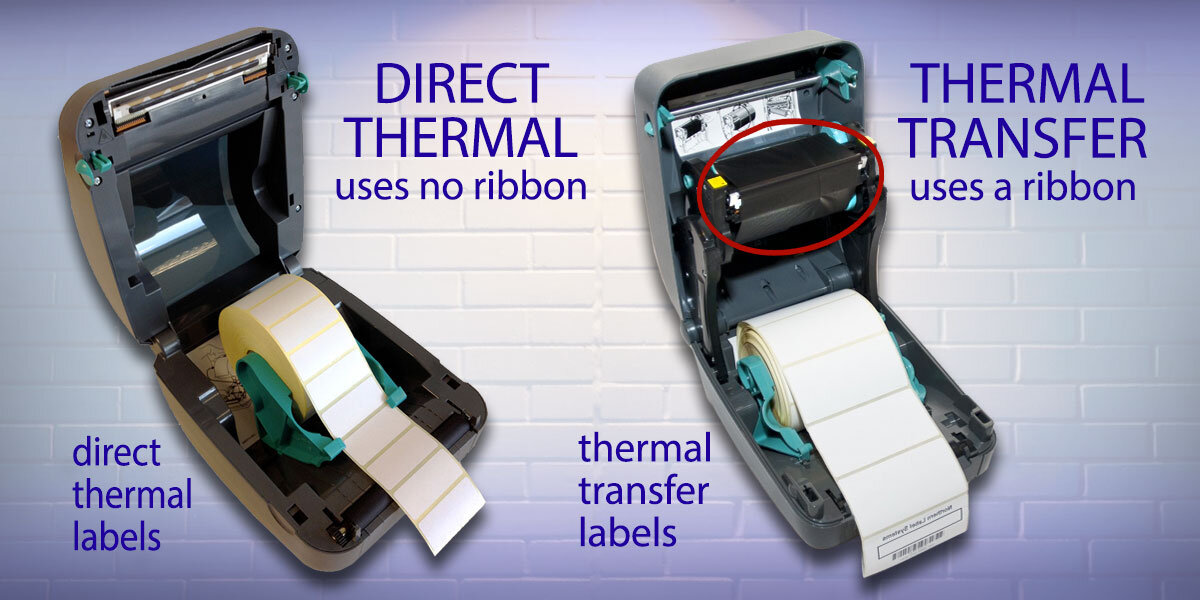
Direct thermal: Heat activates a coating on the label itself, turning it black.
-
Thermal transfer: Heat melts ink from a ribbon onto the label surface.
Both can produce sharp, scannable barcodes, but durability and cost profiles differ significantly.

2. Direct Thermal Printing: Simple and Efficient
Direct thermal printing eliminates ribbons. The label material has a heat sensitive layer that darkens when heated.
Strengths of direct thermal
-
Very simple operation with fewer consumables
-
No ribbon management or waste
-
Faster training for new staff
-
Ideal for high volume, short life printing
-
Fewer mechanical components, which reduces maintenance
Limitations of direct thermal
-
Labels fade when exposed to heat, sunlight, or abrasion
-
Shorter lifespan compared to thermal transfer
-
Limited media choices
-
Not suitable for long term labeling or harsh environments
Best suited for
-
Shipping labels
-
Warehouse cross dock and internal routing labels
-
Retail price labels
-
Event and visitor passes
-
Any label expected to last days or weeks rather than months or years
3. Thermal Transfer Printing: Durable Labels for Long Life
Thermal transfer printing uses a ribbon made of wax, resin, or both. When heated, the ribbon transfers ink onto the label surface.
Strengths of thermal transfer
-
Exceptional durability against UV, chemicals, moisture, and abrasion
-
Wide variety of materials including synthetics
-
Barcodes stay readable for years
-
High consistency for regulatory or compliance labeling
-
Suitable for applications requiring permanent identification
Limitations of thermal transfer
-
Requires ribbons, increasing consumable management
-
Operators must load ribbons correctly
-
Slightly higher ongoing cost
-
More complex print path compared to direct thermal
Best suited for
-
Asset labels for equipment or IT devices
-
Laboratory and healthcare specimens
-
Product identification labels
-
Outdoor labels and industrial rating plates
-
Long term inventory or archival tracking

4. Direct Thermal vs Thermal Transfer: A Side by Side Comparison
| Attribute | Direct Thermal | Thermal Transfer |
|---|---|---|
| Consumables | Labels only | Labels and ribbons |
| Durability | Short to medium term | Long term and highly durable |
| Environmental resistance | Low | High |
| Media variety | Limited | Extensive |
| Print longevity | Weeks to months | Months to years |
| Ease of use | Very high | Moderate |
| Best for | Shipping and temporary labels | Permanent and harsh environment labels |
Both are reliable technologies, but their strengths serve different operational needs.
5. Key Decision Factors for Businesses
To choose correctly, consider how labels function within your broader AIDC workflow.
A. Required lifespan
If labels must survive:
-
Only during shipment or short handling cycles: direct thermal
-
For months or years on products or assets: thermal transfer
Start here, because lifespan is the most decisive factor.
B. Environmental conditions
Labels exposed to temperature swings, sun, chemicals, or rough handling should be printed with thermal transfer materials. For controlled indoor settings, direct thermal often suffices.
C. Industry requirements
Compliance rules may define label durability. Examples include:
-
Chemical labeling standards
-
Medical specimen handling
-
Asset tracking standards
-
Outdoor product labeling requirements
Always confirm with your compliance team before selecting direct thermal for sensitive applications.
D. Operational simplicity
Direct thermal printers are simple to use. This can greatly reduce mistakes and training time in high turnover environments like distribution centers and retail stores.
E. Cost considerations
While direct thermal labels cost less per print, thermal transfer labels may reduce reprinting and scanning failures. Evaluate total cost of ownership, not just consumable price.

6. Practical Label Printer Selection Checklist
How long must each label type remain readable?
Will the label face sunlight, heat, chemicals, or abrasion?
Do we need synthetic materials for durability?
Are there compliance requirements for label longevity?
How many labels do we print per day?
How much training do we want operators to need?
Will the added cost of ribbons pay off in reliability?
Answering these questions will quickly point you toward the most suitable technology.
7. Integrating Printing with Your AIDC System
Your AIDC ecosystem is only as strong as its weakest link. Even high end scanners will fail if labels deteriorate. As you evaluate printing technology, consider:
-
Whether the label material pairs correctly with your scanner type
-
Whether your barcode density matches your scan engine capabilities
-
Whether your label formats align with future system needs such as serialization or RFID integration
Test your printed labels with the scanners used in daily operations. This ensures consistent readability throughout your workflow.
8. Conclusion
Direct thermal and thermal transfer printers excel in different roles. Direct thermal offers simplicity and efficiency for temporary labels. Thermal transfer provides longevity and durability for demanding applications. By evaluating your label lifespan, environment, compliance needs, and operational complexity, you can make a confident decision that supports long term accuracy in your AIDC system.
If your team is unsure which technology fits best, run a pilot with both types of printers and test labels in real working conditions. Your scans, not the spec sheet, will reveal the right choice.
