


Selecting the right electronic device is a core part of building an efficient and accurate business workflow. In modern retail, manufacturing, logistics and asset management environments, the reliability of label printing directly affects product identification, inventory tracking and customer experience. While many companies begin with the assumption that a regular office printer can “handle labels”, this assumption often leads to operational issues such as unreadable barcodes, wasted supplies and rising maintenance costs.
To help you make informed decisions, this article explains why dedicated barcode label printers are essential in AIDC driven operations and how they differ from everyday printers. It also provides structured comparison tables and practical guidance that supports business-focused decision-making.
1. Understanding the Distinct Purposes of Label Printers vs Regular Printers
Label printers and traditional inkjet or laser printers are built on different design philosophies. A regular printer produces documents, reports and images. A professional label printer produces data encoded markings that must be scanned and decoded accurately. These purposes lead to different engineering requirements.
“A label is not just a printout. It is a machine readable data carrier that must withstand real world handling.”
Application Scope Comparison
| Functionality | Label Printer | Regular Printer |
|---|---|---|
| Barcode and QR code printing | Optimized for accuracy | Printed as an image, often unreliable |
| Continuous industrial use | Designed for long hours | Not intended for extended operation |
| Material compatibility | Supports synthetic, thermal, fabric | Limited to office paper |
| Data driven variable printing | Yes, supports serials and database calls | Very limited |
| Core purpose | Identification and traceability | General office printing |
Label printers serve a wide range of professional applications such as product packaging, carton labeling, brand identity, appliance information tags, warehouse coding, jewelry labels and apparel hang tags. These activities demand high precision and durable output, which general printers cannot reliably deliver.

2. Printing Mechanism: Why Technology Matters
The internal mechanism determines print durability, clarity and stability. Professional label printers typically use two technologies: direct thermal or thermal transfer.
“Printing technology defines whether a barcode is readable today and still readable months later.”
Mechanism Comparison
| Feature | Thermal Label Printer | Regular Printer |
|---|---|---|
| Print method | Heat-activated imaging or ribbon transfer | Inkjet droplets or toner fusion |
| Long term reliability | High, consistent imaging | Dependent on ink quality and paper |
| Unattended operation | Stable for continuous printing | Not recommended |
| Maintenance | Low, mostly cleaning | High, includes ink and head replacements |
| Printing noise | Low | Varies by model |
Because label printers do not rely on ink, they maintain consistent output during prolonged operation. They can operate in environments that require fast turnaround, repetitive tasks and high volume throughput.
3. Media and Material Compatibility
One of the most critical differences between the two systems is the range of materials each can handle. Businesses often underestimate how much label durability matters until products begin smudging, peeling or becoming unscannable during transport.
“The right label material prevents scanning failures and product returns.”
Material Compatibility Ta![]() ble
ble
| Material Type | Label Printer Support | Regular Printer Support |
|---|---|---|
| Thermal paper | Yes | No |
| PET / polyester | Yes | No |
| PVC synthetic labels | Yes | No |
| Washable fabric labels | Yes | No |
| Copperplate paper | Yes | Limited and inefficient |
| Standard A4 | Optional | Yes |
In addition to wide material support, thermal transfer printing allows for enhanced durability. When used with the correct ribbon, printed labels can achieve resistance to water, chemicals, abrasion and high temperatures. Meanwhile, printing barcode labels with regular printers frequently leads to dull lines, ink bleeding and damage to the printer head. These failures eventually increase operational cost and slow down workflows.
4. Precision: The Core of Accurate Identification
AIDC systems depend on precise encoding. Barcodes consist of a pattern of black and white bars with strict tolerances for width and spacing. Even slight deviation can cause scanning errors.
“Barcode precision is not optional. The entire identification system depends on it.”
Precision Responsibility Breakdown
| Requirement | Label Printer | Regular Printer |
|---|---|---|
| Control of bar width | High precision, software calibrated | Low, printed as an image |
| Consistency across batches | Stable | Variable |
| High density barcode support | Yes | Often fails |
| Scanner readability | Guaranteed when properly configured | Frequently inconsistent |
Label printers work in coordination with professional barcode software. They calculate the exact line width and spacing required, and the printer executes it with mechanical accuracy. Regular printers simply reproduce a graphic version of a barcode, which can distort during the printing process, resulting in unreadable or partially readable codes.
5. Speed and Production Volume
Speed directly impacts labor efficiency. For businesses dealing with SKU management, fulfillment or production labeling, time saved per label multiplies into significant cost savings.
“Label speed is not about printing faster. It is about maintaining operational flow.”
Performance Comparison
| Performance Metric | Label Printer | Regular Printer |
|---|---|---|
| Printing volume | Continuous, high capacity | Limited by overheating or paper jams |
| Roll based output | Yes, supports thousands per roll | No, sheet by sheet |
| Serial and variable printing | Fully supported | Restricted or manual |
| Integration with WMS or ERP | Common and stable | Rare and inefficient |
Label printers are designed to save preset formats, pull data from databases and produce consistent batches at high speed. Regular printers are not optimized for repetitive label tasks and cannot match the throughput required by growing operations.
6. Practical Decision Framework
To ensure your business selects the right device, apply the following evaluation logic. This structured approach is built for managers who need clarity and technical confidence.
“Choose based on operational requirements, not based on the equipment already in the office.”
Decision Table
| Business Requirement | Recommended Solution |
|---|---|
| Printing more than 50 labels per day | Label printer |
| Producing barcode labels for scanning | Label printer |
| Labels exposed to heat, moisture or chemicals | Thermal transfer + ribbon |
| Occasional printing on A4 documents | Regular printer |
| Database driven or variable serial printing | Label printer |
| High precision and regulatory compliance | Label printer |
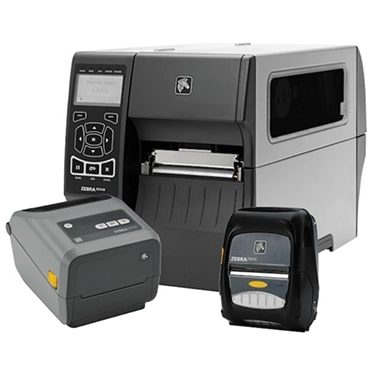
7. A Short Dialogue to Clarify the Decision
You: Can my office printer handle barcode labels?
AIDC Expert: It can print them, but it cannot guarantee readability or durability.You: What if I only need a small number?
AIDC Expert: Even low volume workflows need accuracy. One unreadable barcode disrupts the entire chain.You: Does a label printer really save cost?
AIDC Expert: Yes. It reduces misprints, rejects, scanning errors and maintenance costs. The long term ROI is significant.You: So a label printer is not optional for serious operations.
AIDC Expert: Correct. It is a core device for identification and traceability.
Conclusion: Choose Based on Accuracy, Durability and Scalability
Your label printing device is a crucial investment in your operational infrastructure. A dedicated label printer ensures accurate data capture, stable scanning performance and long term cost control. It supports multiple industrial materials, withstands high volume demands and integrates seamlessly with AIDC systems.
While a regular printer has its place in office environments, it cannot replace a label printer for any business that relies on product labeling, logistics accuracy or traceability. Selecting the right equipment today builds a more efficient, compliant and scalable workflow for the future.
If you need assistance choosing a specific model or matching it to your industry requirements, I can provide a tailored recommendation.
